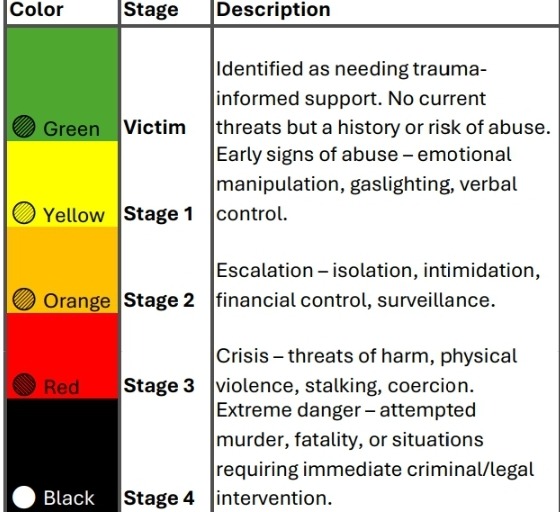
DVFS DAS Chart Model
The DVFS DAS Chart Model is a structured framework used to identify, track, and respond to domestic and family violence in a way that is clear, consistent, and actionable across different services and sectors.
It is based on the idea that domestic abuse is not a single event, but a pattern of behaviours that can escalate over time. The model organises these patterns into five stages, each represented by a colour that reflects the level of risk and urgency. At the lowest level, Green represents someone identified as a victim who may have experienced past abuse or is currently at risk but not in immediate danger. Yellow represents early warning signs of abuse, such as emotional manipulation, gaslighting, and verbal control. Orange reflects escalation, where behaviours become more controlling and intrusive, including isolation, intimidation, financial control, or surveillance. Red represents crisis situations where there is an immediate risk of harm, including threats, physical violence, stalking, or coercion. Black represents the most extreme level of danger, where there may be attempted murder, life-threatening violence, or situations requiring urgent emergency or criminal intervention.
The model also allows for additional contextual tags that help describe the situation further, such as whether a person is engaging in rehabilitation, actively seeking help, or not engaging with support or accountability processes.
A key feature of the DVFS DAS Chart is that it is designed for real-time use. Rather than relying only on static descriptions of abuse, it tracks behaviour over time, including whether controlling behaviours are escalating or de-escalating and whether a person using violence is engaging in change or intervention. This makes it useful for identifying risk patterns earlier and responding before situations reach crisis point.
It is designed to be used across multiple sectors, including police, healthcare, courts, mental health services, and emergency responders. The intention is to create a shared language so that different professionals can communicate risk quickly and consistently without needing lengthy explanations each time. For example, a case might be described simply as “Orange stage with non-compliance,” which immediately communicates the level of concern and response required.
The DVFS DAS Chart does not replace existing frameworks such as the Duluth Model. Instead, it complements them. While models like Duluth explain the underlying dynamics of power and control in abusive relationships, the DVFS DAS Chart focuses on practical, real-time risk staging and response. It provides a way to translate understanding into immediate action and coordination across systems.
Overall, the DVFS DAS Chart Model is intended as a practical tool to improve clarity, consistency, and speed in domestic violence response, with the aim of strengthening early intervention, improving safety outcomes, and reducing the risk of escalation into serious harm.
0 Comments Add a Comment?